
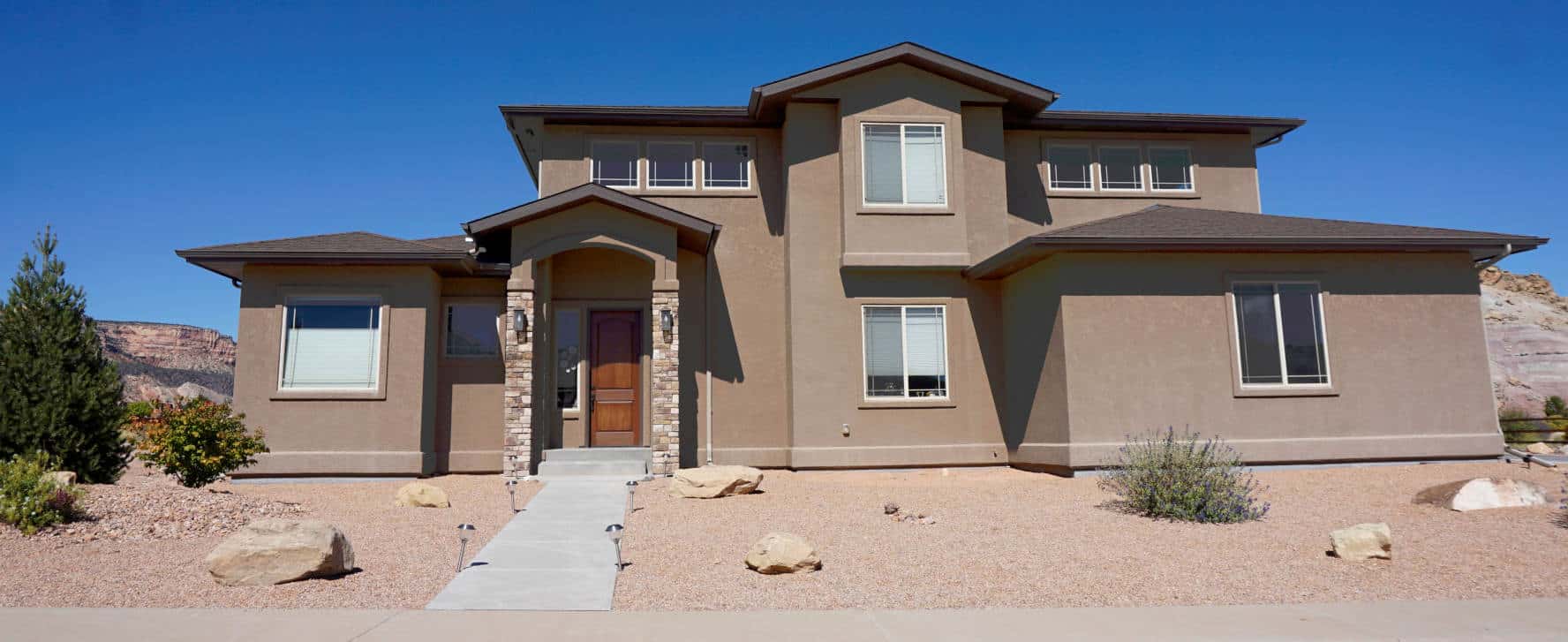
If you’re searching for a real estate agent near me in Colorado, you’re already on the right track. Finding someone local makes a real difference, especially in a state where the market changes from one neighborhood to the next. That said, agents vary in how well they know specific neighborhoods. Some work a tight area and know every street. Others cover a broader area and may not have the same depth of local insight.
Fortunately, it’s not hard to tell the difference once you know what to look for. We’re a Colorado brokerage with agents who live and work in Denver, its surrounding suburbs, Boulder, and Colorado Springs. This page walks you through what your agent should actually know in each area, what questions to ask, and how to make sure you’re working with someone who fits your situation.
What a real estate agent near me should actually know
The right agent isn’t just someone with a license who lives within driving distance. It’s someone who can answer specific questions about your target area without pulling up Zillow. They should know which streets flood during summer storms, the HOA fee for that townhome complex off Yosemite Street, and that the house backing up to the golf course has a special assessment coming next year.
Colorado isn’t one housing market. Per DMAR’s 2026 data, Denver’s median home price is around $625,000. The Colorado Association of Realtors puts Boulder closer to $993,000 and Colorado Springs around $450,000. And within Denver alone, the price swings are dramatic: a bungalow in Barnum might be $425,000 while a comparable house 4 miles east in Washington Park is over $1.1 million. These differences shape your buying strategy, the loan products that make sense, and how you structure your offer.
When you’re searching for a real estate agent near me, “near” should mean someone who’s closed multiple deals in your target area in the past 12 months. If you’re just starting your search, our Colorado relocation guides break down each city in detail.
Denver: where most of the action is
Denver is the center of gravity for Colorado real estate. Over 700,000 people live in the city proper, and the metro area is home to about 2.9 million. Since the 2021–2022 frenzy the market has cooled, but well-priced homes in popular neighborhoods still get 5 to 10 offers the first weekend.
Each neighborhood operates like its own micro-market. Capitol Hill is heavy on condos and rentals, popular with younger buyers, priced in the $300,000–$500,000 range. Washington Park has older single-family homes, big trees, and a median above $1.2 million. RiNo attracts buyers who want converted lofts and walkable restaurants. Central Park (formerly Stapleton) is newer construction with good schools, mostly $550,000–$800,000. Areas like Green Valley Ranch, Montbello, and Glendale are more affordable, with homes from the low $400,000s to about $460,000.
A good local agent in Denver will tell you things a listing site can’t: which developer just filed permits for 200 townhomes two blocks away, why the sellers are motivated, where the Cherry Creek School District boundary actually runs. This kind of information helps you make better decisions. If you’re moving from out of state, see our Denver relocation guide for an overview of what to expect.
Denver’s south suburbs: Highlands Ranch to Castle Rock
The south side of the metro is where a lot of families land. Highlands Ranch is one of the largest planned communities in the country: 96,000 residents, 70 miles of trails, 4 rec centers, and a median home price around $700,000. It sits in the Douglas County School District, which consistently ranks among the top in Colorado.
Castle Rock is 30 miles south of Denver along I-25 — more affordable than Highlands Ranch, with homes often $550,000–$650,000. Parker offers newer construction and family amenities at $650,000–$710,000 for most single-family properties. Lone Tree sits near Park Meadows Mall and the RidgeGate light rail, with many homes above $800,000.
Centennial and Littleton offer established neighborhoods and shorter commutes to downtown, with Centennial ranging $500,000–$700,000. Greenwood Village is one of the priciest suburbs in the metro (median above $1.5 million). Englewood is closer in and more affordable at around $550,000.
West Denver suburbs: Arvada, Lakewood, and Golden
The west side is where Denver meets the foothills. Arvada has a revitalized Olde Town district, easy access to the G Line commuter rail, and homes ranging $550,000–$650,000. Lakewood covers a large geographic area with prices from $350,000 condos to $800,000+ homes near Green Mountain. Golden is smaller and more expensive — expect homes starting around $750,000, driven by Colorado School of Mines and mountain access.
Wheat Ridge and Edgewater are often overlooked. Wheat Ridge has larger lots and mid-century homes in the $575,000–$625,000 range. Edgewater (about 5,000 people) has grown into a walkable, restaurant-heavy neighborhood that feels like an extension of Denver’s Sloan’s Lake area.
North Denver suburbs: Westminster to Thornton
The north suburbs tend to be more affordable and are growing fast. Westminster straddles Adams and Jefferson counties with homes from $400,000–$600,000. Broomfield is positioned between Denver and Boulder along US-36, popular with tech workers commuting to both cities. Thornton and Northglenn homes are mostly $450,000–$550,000. Brighton, about 25 miles northeast, has newer subdivisions around $500,000–$530,000.
Aurora is Colorado’s third-largest city at 380,000+ residents. Prices vary wildly depending on the neighborhood — an agent who “knows Aurora” should be able to tell you the difference between a home near the Anschutz Medical Campus and one near Colfax without checking a map.
Boulder: limited inventory, strict rules, high prices
Boulder is a different market entirely. The city has strict growth limits, a downtown height restriction, and open space on all sides that prevents outward expansion. Per CAR data, entry-level condos start around $540,000. A three-bedroom in Table Mesa or Martin Acres runs $900,000–$1.3 million. Old North Boulder and Mapleton Hill: $1.5 million and up.
Boulder has specific rules around rental permits, ADU construction, and occupancy limits. An agent who doesn’t know these regulations can cost you time and money — some buyers plan to rent out a basement unit only to learn the property doesn’t have the right permits. Ask your agent how many Boulder-specific transactions they closed in the past year. Nearby Longmont offers a more affordable alternative about 15 miles north, with a median around $545,000.
Colorado Springs: more space, lower prices, different dynamics
Colorado Springs is Colorado’s second-largest city and the market differs from Denver or Boulder in almost every way. Per CAR, a 2,500-square-foot home in Briargate might cost $500,000 — that same home in Denver would be $750,000. Five military bases (Peterson Space Force Base, Fort Carson, Schriever, and the Air Force Academy) drive consistent demand and shape the buyer pool. If you’re a service member, make sure your agent has handled VA loans and PCS timelines before.
Questions to ask before you hire an agent
How many transactions did you close in this specific neighborhood last year? Not “the metro area” — this zip code. An agent who’s closed several deals in your target area will have the most relevant insight.
How do you handle multiple-offer situations? In Colorado’s market this comes up constantly. You want an agent with a strategy — escalation clauses, appraisal gap coverage, flexible closing dates — not just “offer over asking and hope.”
Can you walk me through costs beyond the purchase price? Closing costs in Colorado typically run 2–5% of the purchase price. Property taxes vary by county. HOA fees range from $100–$600/month depending on the community. A good agent covers all of this before you start touring homes.
Buying vs. selling: different agent skills
A buyer’s agent needs to be fast, responsive, and good at noticing details during showings. A seller’s agent needs to understand pricing strategy, staging, photography, and online marketing. They’re different skill sets. Ask about experience on the side you need most.
If you’re selling, ask how the agent plans to market beyond the MLS — professional photography, social media targeting, open house timing, pricing analysis from recent comps. If you’re buying, you want an agent who can write an offer at 9 PM on a Tuesday because that’s when the listing agent set the deadline.
Why ZBell for your Colorado search
We’re a Colorado brokerage, not a national franchise with a local office. Our agents live in these neighborhoods. They know which intersection in Colorado Springs to avoid during rush hour and which house three doors down sold for $40,000 under asking because of a drainage issue — and why you should get a sewer scope before you offer on this one too.
We cover first-time buyers, move-up buyers, investors, and sellers. Check our Denver Metro market report for the latest numbers, or reach out to start a conversation.
Frequently Asked Questions
How do I find a good real estate agent near me in Colorado?
Ask how many transactions they closed in your specific neighborhood last year — not the metro area, your zip code. Check online reviews, ask for references from past clients, and interview at least two or three agents. An agent who can name specific streets, recent sale prices, and school district boundaries without looking them up is usually a good sign.
What does a real estate agent cost in Colorado?
Agents are compensated through commission negotiated as part of the transaction, split between the buyer’s and seller’s agent. As a buyer, you generally don’t pay your agent’s commission directly out of pocket — though the details shifted after the 2024 NAR settlement. Ask your agent to walk you through exactly how they get paid before you sign a representation agreement.
Should I use a local agent or a big national brokerage?
Local agents almost always have better neighborhood-level knowledge. A national brokerage might have a larger marketing budget, but the agent assigned to you might cover a 50-mile radius and not know the difference between Highlands Ranch and Castle Rock. The individual agent’s knowledge and track record matter more than the brand name on their card.
How long does it take to buy a home in Colorado?
From starting your search to closing day, most buyers spend 2–4 months. The contract-to-close period is usually 30–45 days. In competitive areas like Denver or Boulder, you might make offers on several homes before one gets accepted. Having a pre-approval letter ready before you start touring saves significant time.
Data sources used in this article:
DMAR Denver Metro Market Trends Reports, 2025–2026
Colorado Association of Realtors Market Trends, 2025–2026
Zillow Denver Metro Home Values
About the author: Zaynab Sepahi is a licensed Colorado Realtor® and founder of ZBell Real Estate, with over 15 years of experience in the Denver Metro market. She has helped hundreds of buyers and sellers across Denver, Boulder, Colorado Springs, and surrounding suburbs. ZBell has earned 100+ five-star reviews on Google, Zillow, and Realtor.com. Learn more about Zaynab.