
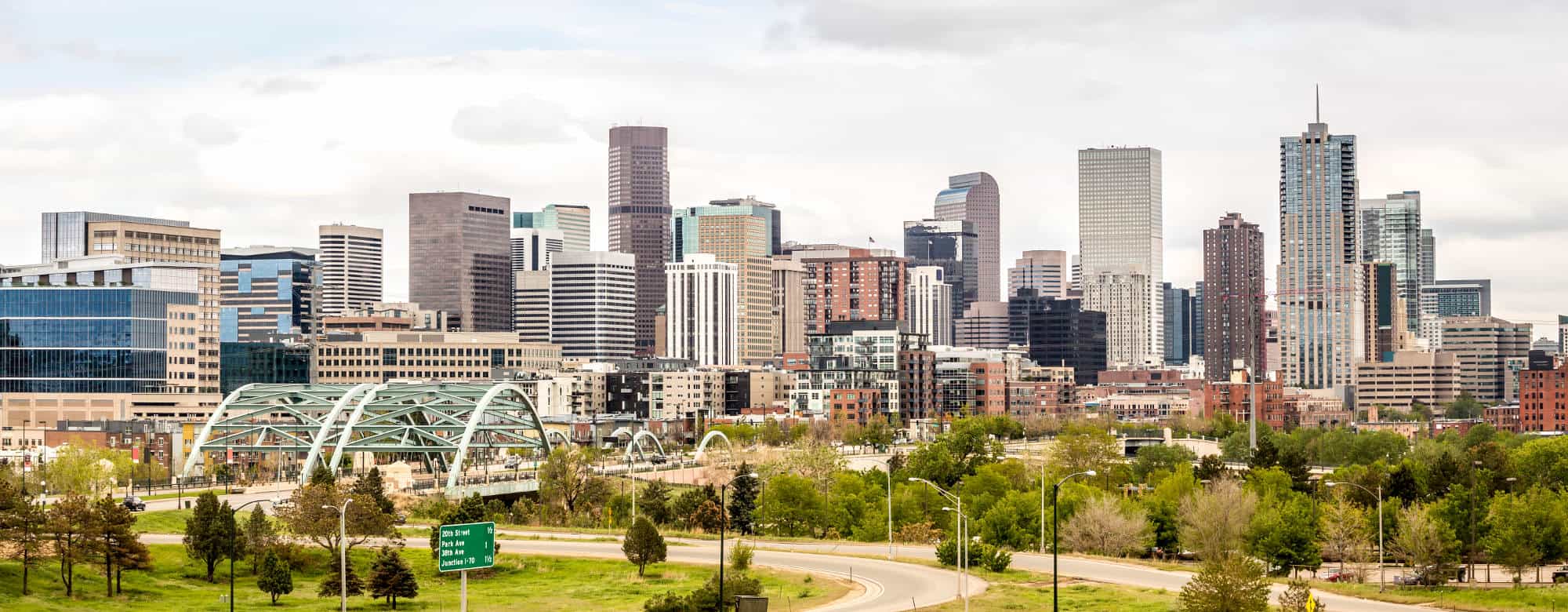
Colorado calls with mountain views, over 300 days of sunshine, and a lifestyle that blends outdoor adventure with city living. More individuals and families are choosing to relocate here each year — Colorado’s State Demography Office projects the state will grow to over 6 million residents by 2030, driven by job growth, quality of life, and in-migration from California, Texas, and Illinois.
Relocating to Colorado means choosing a lifestyle, a community, and a long-term investment. The options range from urban Denver neighborhoods to Boulder’s outdoor-innovation culture to Colorado Springs’ more affordable pace. Here’s what each market actually looks like on the ground.
Colorado living overview
Lifestyle and outdoor access
Colorado has 58 fourteeners, 26 ski resorts, and more than 42 million acres of public land. Outdoor recreation isn’t a weekend hobby here — it’s part of daily life. Residents ski in the morning and make it to a downtown dinner the same evening. Hiking, biking, kayaking, and climbing are all accessible within 30–60 minutes of most Front Range cities. Colorado Parks and Wildlife manages over 350 state parks and wildlife areas.
Cost of living and economy
Per DMAR’s 2026 data, median home prices in the Denver metro range from $600,000 to $750,000, with entry-level condos starting around $400,000. Colorado’s economy spans tech, aerospace, healthcare, and tourism, with major employers including Lockheed Martin, UCHealth, Google, and a growing startup ecosystem anchored by Denver and Boulder.
Education and taxes
Colorado’s flagship universities — University of Colorado (Boulder) and Colorado State University (Fort Collins) — anchor a well-educated workforce. Top K-12 districts include Douglas County, Cherry Creek, and Boulder Valley. On taxes: Colorado has a flat income tax rate of 4.4%, property taxes among the lowest in the nation, and no estate or inheritance tax — a meaningful financial advantage for relocating families and retirees.
Denver Metro: a hub of opportunity
More than 3 million people live across the metro, spanning six counties: Denver, Arapahoe, Jefferson, Adams, Douglas, and Broomfield. Per the Colorado Association of Realtors, the metro’s diverse housing stock ranges from affordable townhomes to luxury estates, with prices varying dramatically by neighborhood and suburb.
North Denver Metro suburbs
I-25 and US-36 connect most north metro cities to downtown Denver in 20–35 minutes. Thornton offers family-friendly neighborhoods and recreation centers, with homes ranging from the mid-$400,000s to $700,000. Brighton has a small-town agricultural heritage and homes often starting in the $400,000s — one of the more affordable new-construction options in the metro. Northglenn is known for strong community programming and well-maintained parks. Westminster sits between Denver and Boulder with open space, mountain views, and the Orchard Town Center and Butterfly Pavilion. Broomfield blends suburban comfort with top-rated schools in the Adams 12 and Boulder Valley districts. Commerce City offers more attainable housing and access to the Rocky Mountain Arsenal National Wildlife Refuge.
South Denver Metro suburbs
The South Metro is widely recognized for upscale neighborhoods and excellent schools. Douglas County School District ranks among the top in the state. The E and C light rail lines connect many communities directly to downtown Denver and the Tech Center.
Littleton combines historic charm with a walkable downtown along Main Street and easy access to Chatfield Reservoir, with homes from the $500,000s to over $1 million. Centennial offers spacious homes with a master-planned feel. Englewood provides light rail access and proximity to downtown while keeping its own identity. Greenwood Village is the area’s luxury anchor, with expansive properties often exceeding $1.5 million. Lone Tree continues to grow around Park Meadows and the RidgeGate light rail station.
Highlands Ranch is one of Colorado’s most recognized planned communities — four recreation centers, 70+ miles of trails, and over 2,000 acres of open space, with homes from the $500,000s to well over $1 million. Castle Rock delivers small-town character with iconic views and a revitalized downtown. Parker balances rural charm with suburban amenities and a strong equestrian culture, with homes typically starting in the $500,000s.
West Denver Metro suburbs
The West Metro puts residents within a 15-minute drive of trailheads and under 30 minutes from downtown Denver. Jefferson County’s open space program protects over 54,000 acres of trails and natural areas.
Lakewood is the largest city in Jefferson County, with housing ranging from affordable condos to custom hillside homes, plus proximity to Red Rocks Amphitheatre and Bear Creek Lake Park. Arvada’s Olde Town has a charming historic district with local shops, a farmers market, and G Line light rail into downtown. Golden delivers true foothills living — home to the Colorado School of Mines and Coors Brewery, with one of the best small downtowns in Colorado. Wheat Ridge offers mature trees and homes in the $400,000–$600,000 range. Edgewater is a small, walkable enclave near Sloan’s Lake with the popular Edgewater Public Market.
East Denver Metro suburbs
Aurora is Colorado’s third-largest city with over 390,000 residents and the broadest range of housing in the metro — from affordable townhomes in the $300,000s to luxury homes exceeding $1 million. It’s home to the Anschutz Medical Campus, Buckley Space Force Base, Southlands Mall, and the Aurora Reservoir. Glendale is a small enclave entirely surrounded by Denver, known for entertainment, nightlife, and its own independent city government and tax structure.
Denver City: the Mile High experience
Denver proper has over 700,000 residents and a strong job market in tech, finance, healthcare, and government. Each neighborhood has its own character: Highland and LoHi for walkability and dining; Washington Park and Cherry Creek for families and luxury buyers; Capitol Hill and Congress Park for young professionals in charming older homes. RTD’s light rail and bus network connects neighborhoods to the airport, suburbs, and the downtown core. Median prices range from $400,000 for condos to well over $1 million for single-family homes in top neighborhoods.
Boulder: nature and innovation
Boulder sits beneath the iconic Flatirons with immediate access to hundreds of miles of trails and Pearl Street Mall as its cultural heart. The University of Colorado anchors a youthful, entrepreneurial spirit supported by tech startups and outdoor industry leaders like VF Corporation and Ibotta. Per CAR, the median home price typically exceeds $1 million. Boulder Valley School District is one of the most respected in the state. Longmont, about 15 miles north, offers a growing downtown and strong community feel with homes $200,000–$400,000 less than comparable Boulder properties.
Colorado Springs and Castle Pines: southern Colorado
Colorado Springs is Colorado’s second-largest city at 480,000+ residents, anchored by the Air Force Academy, Fort Carson, and a growing tech sector at the base of Pikes Peak. Natural attractions like Garden of the Gods are within city limits. Per CAR data, median home prices fall in the $400,000–$500,000 range — significantly more affordable than Denver or Boulder. Academy District 20 is one of the top school districts in the state.
Castle Pines sits between Denver and Colorado Springs along I-25, offering luxury homes and golf communities starting above $800,000, with gated community properties exceeding $2 million.
Frequently Asked Questions
What is the best city in Colorado to relocate to?
It depends on your priorities. Denver is best for career opportunities, urban amenities, and the widest range of housing options at $600,000–$750,000 median. Boulder is best for outdoor lifestyle and innovation culture, but costs exceed $1 million for single-family homes. Colorado Springs is best for affordability ($400,000–$500,000 median), military families, and a slower pace with major-city amenities. Suburbs like Highlands Ranch, Castle Rock, and Littleton suit families prioritizing top school districts.
How much does it cost to live in Colorado?
Housing is the biggest variable. Per DMAR, Denver metro median home prices run $600,000–$750,000. Colorado’s flat 4.4% income tax and low property tax rates partially offset higher housing costs. Utilities average $150–$300/month. Groceries and transportation run close to the national average. Overall cost of living is above the national average primarily due to housing.
What do I need to know before relocating to Colorado?
A few things that catch out-of-state buyers off guard: (1) Altitude — Denver sits at 5,280 feet, and mountain towns are much higher. It takes 2–4 weeks to fully acclimate. (2) Dry climate — humidity is very low; skin, sinuses, and wood furniture all need adjustment. (3) Hail — Colorado has significant hail storms, particularly in June and July. Check roof condition and hail damage carefully when buying. (4) Expansive soils — Colorado’s clay soils expand and contract with moisture, which can affect foundations. A thorough inspection is non-negotiable.
Is Colorado a good place to buy real estate?
Colorado has strong long-term fundamentals: consistent population growth, a diverse economy, limited developable land along the Front Range, and sustained lifestyle demand. The 2026 market has more inventory and negotiating room than 2021–2022, making it a better entry point for buyers. Values have held up well despite rising rates — per CAR, the statewide median is largely unchanged year-over-year.
Which states are people moving to Colorado from?
Texas is consistently the #1 feeder state for Colorado inbound moves, followed by California, Illinois, and Florida. Colorado’s State Demography Office tracks migration patterns annually. The primary draw is quality of life — outdoor access, job market, and lifestyle — combined with lower housing costs compared to California’s coastal markets.
Data sources used in this article:
DMAR Denver Metro Market Trends Reports, 2025–2026
Colorado Association of Realtors Market Trends, 2025–2026
Colorado State Demography Office
Colorado Department of Revenue — Tax Rates
About the author: Zaynab Sepahi is a licensed Colorado Realtor® and founder of ZBell Real Estate, with over 15 years of experience in the Denver Metro market. She has helped hundreds of buyers and sellers across Denver, Boulder, Colorado Springs, and surrounding suburbs. ZBell has earned 100+ five-star reviews on Google, Zillow, and Realtor.com. Learn more about Zaynab.